Blog

  • When the Enemy is Spiritual Energy

    Not Every Enemy Wears A Badge

    🕊️ Some enemies show up in boardrooms and inboxes.

    They don’t always announce themselves with conflict or chaos. They slip in quietly—through doubt, distraction, discouragement. Through the whisper that says, “You’re not enough,” or the fog that makes your purpose feel distant and dim.
    These are spiritual enemies. And they require a different kind of armor of protection—discernment.

    🌿 Recognizing the Invisible Battleground
    Spiritual attack isn’t always dramatic. Sometimes it looks like:

    • Creative paralysis when your soul is ready to birth something beautiful
    • Perfectionism disguised as productivity
    • Emotional exhaustion that no nap can fix
    • A sudden wave of comparison, just as you were about to launch
    • Feeling disconnected from your own mission, even when the strategy is solid
      These moments aren’t just “off days.” They’re invitations to pause, recalibrate, and protect what’s sacred.

    🛡️ Energetic Protection for Spiritual Resistance
    When the enemy is spiritual, your defense must be soulful. Here’s what that can look like:

    • Truth Rituals: Speak affirmations that remind you who you are and why you started. Write them. Wear them. Whisper them.
    • Boundaries: Protect your energy like it’s your most valuable currency—because it is.
    • Gentle Gamification: Turn healing into a game. Celebrate small wins. Make progress visual and cozy.
    • Seasonal Anchors: Align your campaigns with nature’s rhythms. Let Autumn remind you to release. Let Winter teach you to rest.
    • Community as Covering: Surround yourself with people who pray, affirm, and speak life into your vision. Healing is collective.

    🔥 The Power of Naming the Enemy
    When you name the spiritual enemy—whether it’s fear, shame, distraction, or despair—you strip it of its power. You stop wrestling shadows and start reclaiming your light.
    You remember:
    You are not your overwhelm.
    You are not your delay.
    You are not your doubt.
    You are a movement. A mirror. A messenger.
    And your healing is a journey—your journey.

    📔 Call to Action
    Feeling this message in your spirit?
    ✨ Journal your reflections using the prompt: “What spiritual enemies have tried to dim my light, and how am I reclaiming it?”
    🍂 Explore the Autumn Harvest Keeper Bundle for cozy tools to protect your energy and stay aligned.
    💌 Or join the newsletter for soulful strategies and seasonal rituals delivered with love.

    If this page lit even one ember of resonance, let it burn gently through the season. You are seen. You are held. You are part of something unbreakable.

    🔥 Ember of Resonance

    If this page lit even one ember of resonance, let it burn gently through the season. You are seen. You are held. You are part of something unbreakable.

    Thank you for showing up — not just here, but for yourself. Your presence in this space is a blessing, and I’m honored to walk beside you.

    My Sister Is Me Too

    Stay Connected:

    FB: MySisterIsMe

    #EndWorkplaceAbuse and #NotPartOfTheJob — and let’s make psychological safety the norm, not the exception.

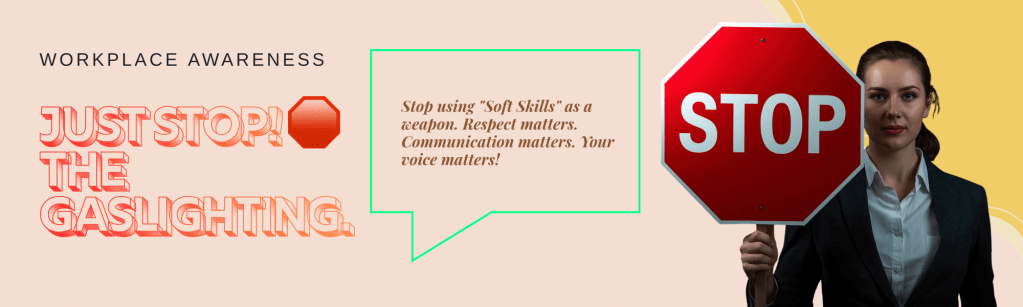
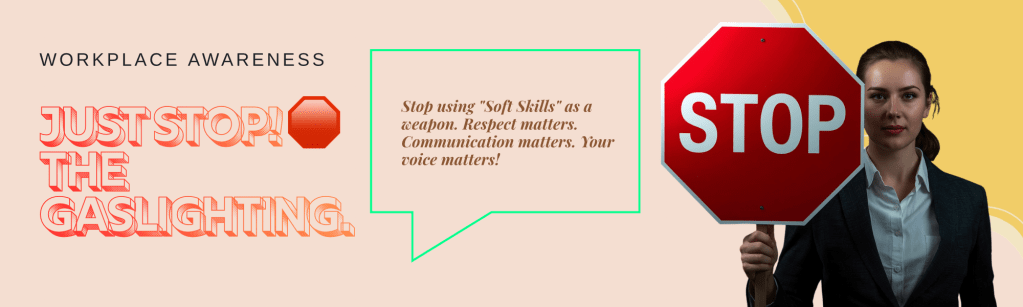
  • Soft Skills Aren’t Soft: How Organizational Development Exposes Leadership Blind Spots

    Soft Skills Aren’t Soft: How Organizational Development Exposes Leadership Blind Spots

    There’s a strange irony in the workplace:
    The people who talk the most about “soft skills” are often the ones who understand them the least.

    I learned this early in my career — not because I lacked soft skills, but because I invested in them.
    I studied organizational development.
    I learned how systems shape behavior.
    I learned how power dynamics influence communication.
    I learned how emotional intelligence stabilizes teams.

    And yet, the people quickest to question my soft skills were the ones who had never studied leadership beyond their own authority.

    That’s when I realized something important:

    Soft skills aren’t soft.
    They’re strategic.
    And most leaders misinterpret them because they’ve never been trained to recognize them.


    1. Soft Skills Are Organizational Skills

    When I took my OD course, I wasn’t learning how to “be nice.”
    I was learning how organizations actually function:

    • how conflict escalates
    • how communication breaks down
    • how power is used and misused
    • how people respond to unclear expectations
    • how emotional regulation shapes team culture

    These aren’t personality traits.
    These are leadership competencies.

    But in many workplaces, soft skills get reduced to:

    “Be pleasant.”
    “Don’t rock the boat.”
    “Smile more.”
    “Stay quiet.”
    “Don’t take things personally.”

    That’s not leadership.
    That’s compliance.


    2. High‑EQ Employees Get Misread by Low‑EQ Leaders

    Here’s the part no one says out loud:

    Emotionally intelligent employees often get misinterpreted by leaders who lack emotional intelligence.

    Why?

    Because high‑EQ people:

    • notice patterns
    • name the real issue
    • ask clarifying questions
    • sense tension in the room
    • understand unspoken dynamics
    • refuse to participate in dysfunction

    To an untrained leader, this looks like:

    • “overthinking”
    • “being sensitive”
    • “making things deeper than they are”
    • “being emotional”
    • “doing too much”

    But what’s actually happening is this:

    The high‑EQ employee is reading the system.
    The low‑EQ leader is reacting to the discomfort of being seen.


    3. Soft Skills Are the Hardest Skills to Teach

    Organizational development taught me something that changed everything:

    Technical skills create output; Soft skills create culture.

    And culture determines:

    • retention
    • trust
    • communication
    • psychological safety
    • decision quality
    • team performance

    You can train someone to use a tool.
    You can’t train someone to regulate their ego in a meeting.

    That’s why true soft skills are the hardest skills to teach — and the easiest for insecure leaders to dismiss or misinterpret.


    4. Leadership Misinterpretation Is a Systems Problem

    When leaders misinterpret soft skills, it’s not a personal failure. It’s a systems failure.

    Most leaders were never taught:

    • how to read emotional cues
    • how to navigate conflict
    • how to communicate expectations
    • how to manage their own reactions
    • how to build trust
    • how to create alignment

    So when they encounter someone who has those skills, they don’t recognize them as strengths.

    They see them as threats.

    Organizational development gave me the language for this. It taught me that misinterpretation is not about the individual — it’s about the system they’re operating in.


    5. Soft Skills Are Leadership Skills

    Here’s the truth I wish more organizations understood:

    Soft skills are not optional.
    They are the foundation of effective leadership.

    They are:

    • behavioral competencies
    • relational competencies
    • cognitive competencies
    • self‑management competencies
    • systems‑thinking competencies

    They determine whether a leader can:

    • communicate clearly
    • navigate complexity
    • build trust
    • reduce friction
    • stabilize a team
    • make decisions that stick

    Soft skills aren’t soft.
    They’re structural.

    They’re the difference between a team that survives and a team that thrives.


    If this resonates…

    I write about:

    • clarity
    • alignment
    • operational calm
    • emotional intelligence
    • leadership misinterpretation
    • organizational behavior
    • and the systems underneath workplace dynamics

    Because the truth is simple:

    Soft skills are not the “nice‑to‑haves.”
    They are the work.

    #HealthyLeadership #WorkplaceCulture #PsychologicalSafety #TeamDynamics #LeadershipMatters #PeopleFirstLeadership

    #MySisterIsMeToo #MSiM2

  • ✨A Mental Health Month Reflection 💫

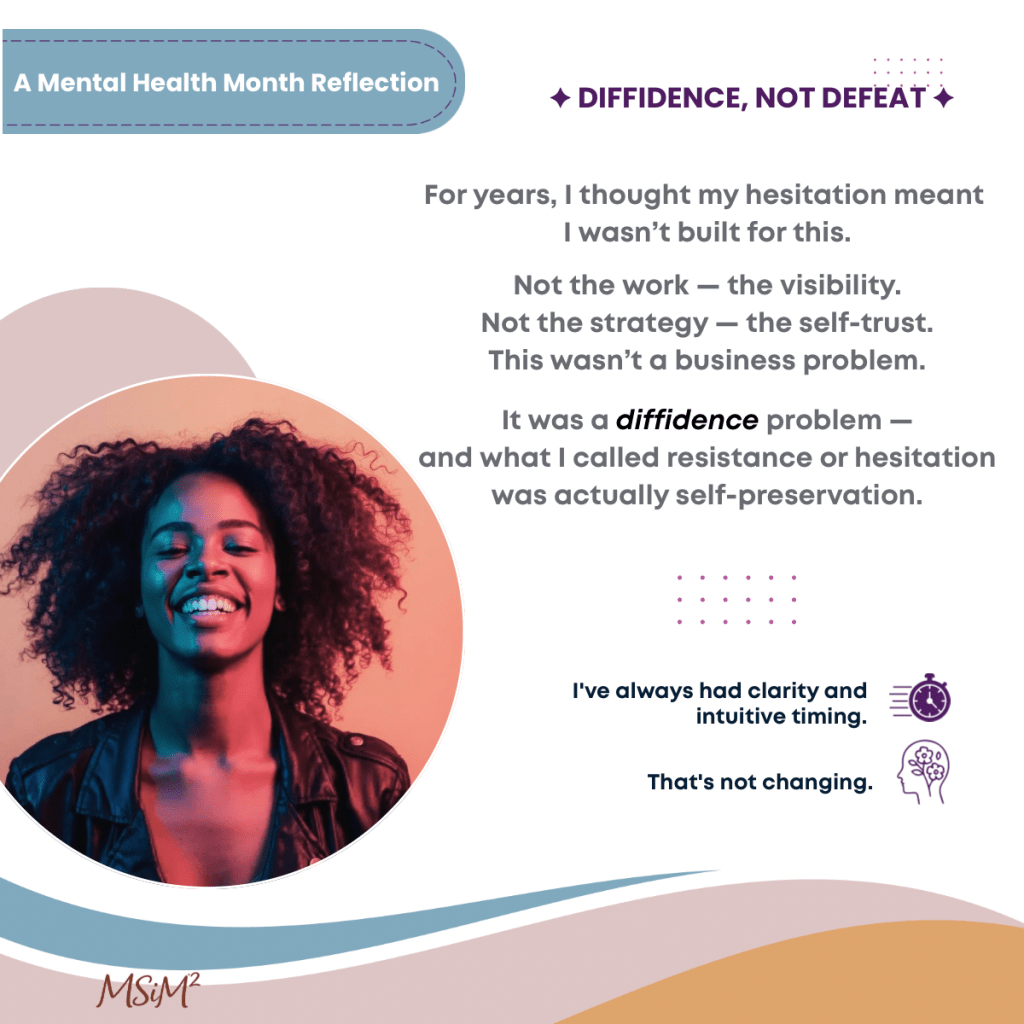
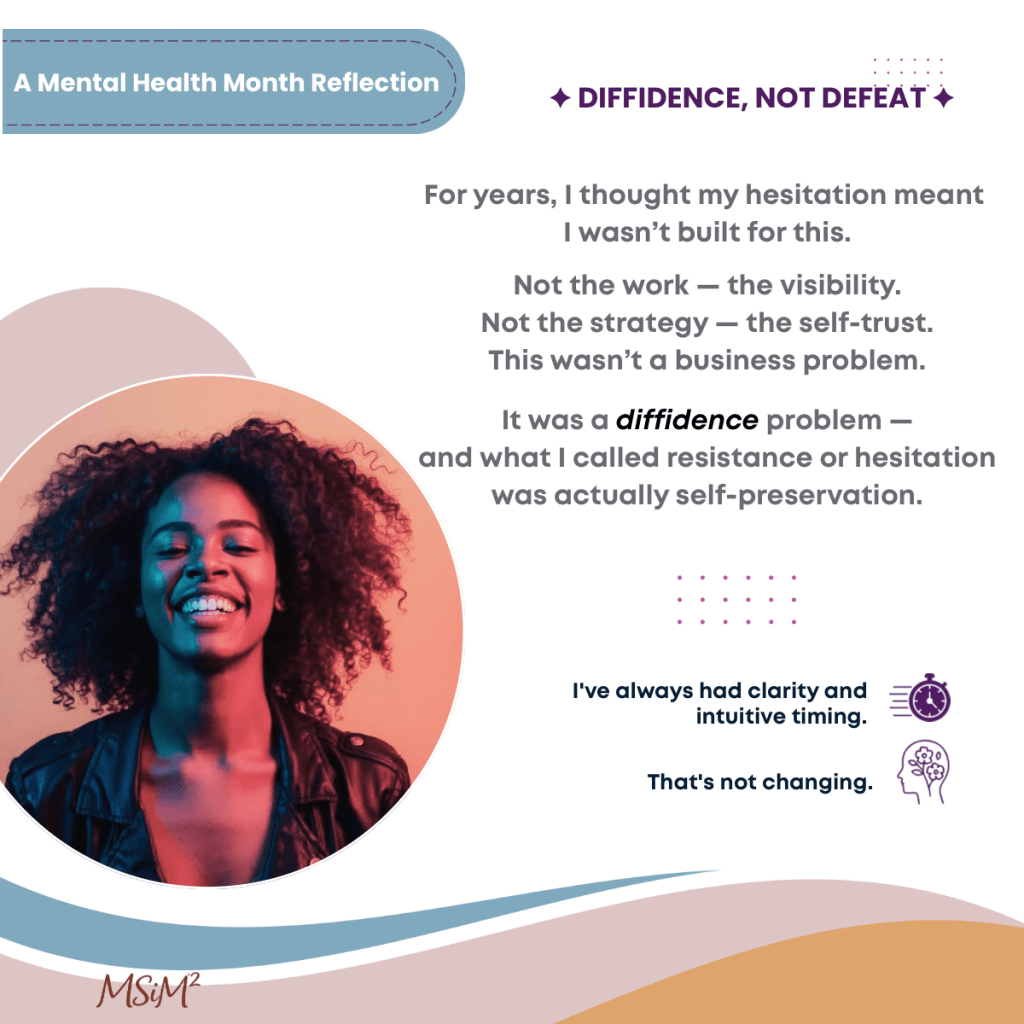
    ✨A Mental Health Month Reflection 💫

    For a long time, I misread my own signals. 🆘 I’ve always had intuitive timing; but second guessed it. 

    • I thought my hesitation meant I wasn’t built for visibility.
    • I thought my pauses meant I wasn’t ready.
    • I thought my internal resistance meant something was wrong with me.

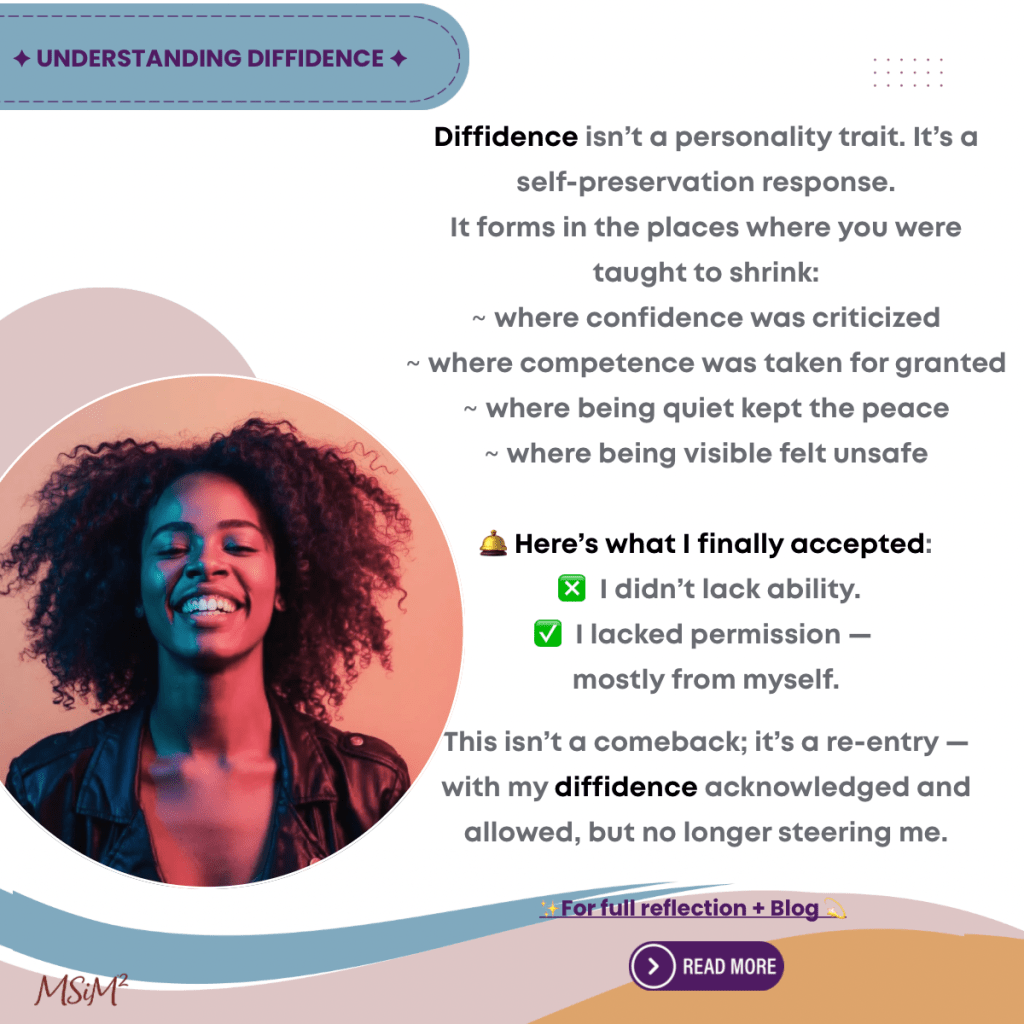
    But diffidence isn’t a flaw.

    It’s a self‑preservation response — a quiet, protective instinct shaped in the places where I learned to shrink:

    ~ where confidence was criticized

    ~ where competence was taken for granted

    ~ where being quiet kept the peace

    ~ where being visible felt unsafe

    Once I named that pattern, everything shifted.

    I didn’t lack ability. I lacked permission — mostly from myself.

    And naming diffidence didn’t make it disappear.

    ~ It made it honest.

    ~ It made it understandable.

    ~ It made it something I could work with instead of work against.

    This is why I say:

    This isn’t a comeback.

    It’s a re‑entry — with my diffidence acknowledged and allowed, but no longer steering me.

    ~ I’m not resisting myself anymore.

    ~ I’m not fighting the parts of me that learned to survive.

    ~ I’m integrating them — and choosing my direction with clarity.

    Diffidence didn’t defeat me.

    It protected me until I was strong enough to lead myself again.

    And now that I can articulate it, I can welcome it.

    Not as a driver.

    Not as a decision‑maker.

    But as a signal — a reminder of how far I’ve come and how gently I can move forward.

    If this resonates with you, you’re not alone.

    Sometimes the thing we call “self‑doubt” is really just a nervous system asking for safety before it embraces visibility.

    And that’s not weakness.

    That’s wisdom. Own it! 

    #MSiM2 #JournalTherapy #MentalHealthAwareness #EmotionalIntelligence #SelfReflection #InnerWork  #HealingJourney #NervousSystemHealing #TraumaInformed

    Follow more content https://ko-fi.com/msim2journaltherapy

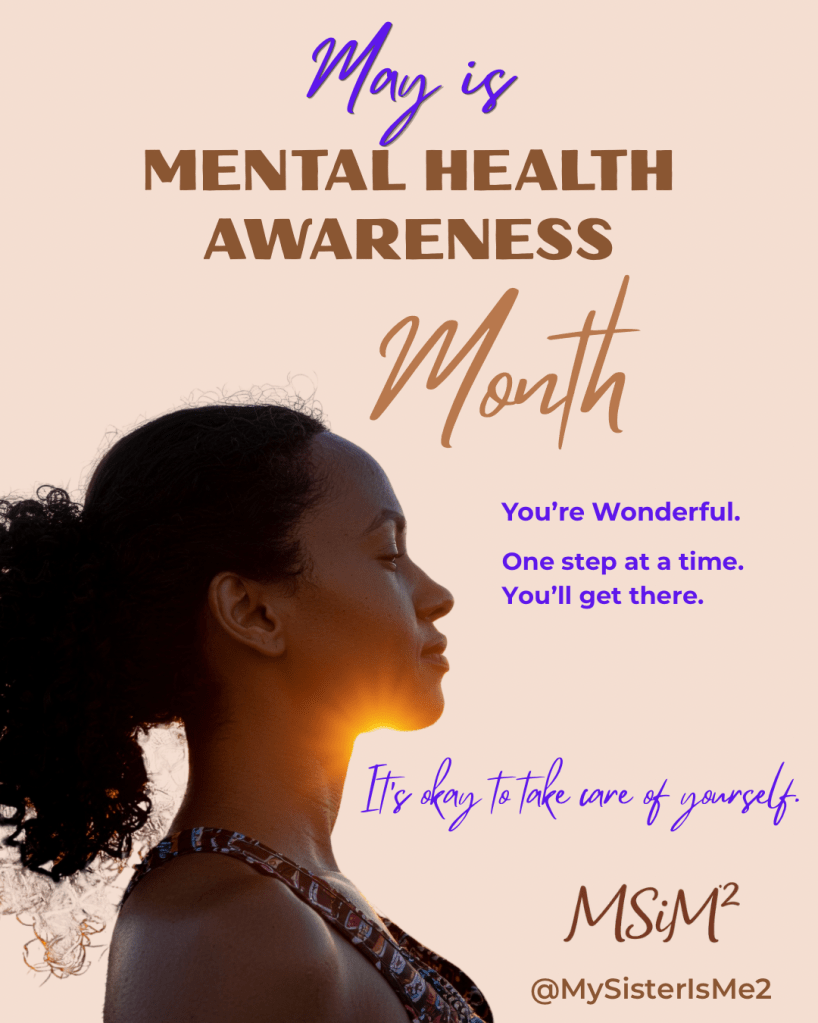
  • May is Mental Health Awareness Month

    May is Mental Health Month — and naming what’s real is the first act of liberation.

    This month is not about pretending everything is fine. It’s about telling the truth your body has been holding 🫂
    The truth that’s been whispering 💬
    The truth that’s been heavy 💪🏼
    The truth that deserves air ⛓️‍💥

    Honesty is not a threat to your becoming — it’s the doorway into it.

  • Coffee Date Crafting Series

    Coffee Date Crafting Series — coming soon.

    Whether you’re team steaming‑mug or team iced‑cup‑clinking, you’ve got a seat at my table.

    We’re crafting into Spring & Summer with soft projects, scrap‑happy play, and a little ritual joy.

    Bring your drink of choice. I’ll bring the cozy.

    CoffeeDateCrafting #ScrapItOrCraftIt
    MySisterIsMeToo #MSiM2 #SpringCrafting #SummerCrafting #SeasonalCreativity

  • Question of the Week

    What is one question you hate to be asked? Explain.

  • From Survival to Sovereignty

    From Survival to Sovereignty

    🌑 Reclaiming Your Light After a Toxic Workplace

    There’s a particular kind of exhaustion that comes from enduring a toxic workplace—especially when the toxicity wears a nameplate and holds a title. A bullying manager doesn’t just challenge your performance; they chip away at your spirit. The constant microaggressions, gaslighting, and power plays create an environment thick with low-vibration energy. It’s not just unprofessional—it’s spiritually corrosive.

    🧠 The Mental Toll: When Work Becomes War

    You start second-guessing your instincts. Your confidence shrinks. You rehearse conversations in your head, trying to anticipate the next attack. You feel like you’re walking on eggshells, even when you’re doing your job well. This isn’t just stress—it’s trauma. And it doesn’t clock out when you do.

    🌫️ The Spiritual Drain: Low Vibration Energy in Action

    Low vibration energy shows up as:

    • Chronic fatigue and emotional numbness

    • Self-doubt disguised as “professional humility”

    • A shrinking sense of purpose

    • Feeling disconnected from your intuition and creativity

    It’s the kind of energy that dims your inner light and makes you forget who you are.

    🔥 The Shift: Choosing Healing Over Hustle

    Surviving a toxic workplace isn’t just about quitting or filing a complaint. It’s about reclaiming your energetic sovereignty. Here’s how:

    1. Name the Experience

    Call it what it is: bullying, manipulation, toxicity. Naming it breaks the spell of confusion and gaslighting.

    2. Cleanse Your Energy

    Whether it’s journaling, breathwork, or a full moon release ritual, find a practice that helps you shed the residue of that environment. You’re not just leaving a job—you’re detoxing your spirit.

    3. Affirm Your Worth

    Create affirmations that speak directly to the wounds:

    • “I am safe to speak my truth.”

    • “My intuition is valid and powerful.”

    • “I release what no longer serves me.”

    These aren’t just words—they’re energetic recalibrations.

    4. Rebuild with Intention

    When you’re ready to re-enter the professional world, do so with boundaries, clarity, and a renewed sense of self. You’re not just looking for a job—you’re curating a space where your light can thrive.

    🌟 Closing Reflection: You Are the Medicine

    The most powerful thing you can do after surviving a toxic workplace is to alchemize that pain into purpose. Your story becomes a guidepost for others. Your healing becomes a ripple effect. And your light—once dimmed—is now a beacon.

    You didn’t just survive. You transmuted. You rose.

    If you’ve experienced something similar, you’re not alone. Your story matters whether speaking it out loud or writing it down privately in a journal. Take your power back.

    Let’s shift this narrative together. What was your journey to healing?  Drop a comment or to show support 🎗️.

    #MySisterIsMeToo #MSiM2 #SystematicNotPersonal #YANA  #JournalTherapy #HaveARealConversation #SeeSomethingSaySomething #YourStoryOurStory #NeurodivergentWomen #ADHDWomen #WomenOfColor #Blacklisted #WorkplaceWellness #HealingOutLoud

  • Be Mindful of the Opinions you allow to harvest.

    Thoughtful Thursday Series

    Most who know me know I have always rocked short hair cuts. Recalling when I first posted to Facebook, a classmate commented that my cut made me look old.

    Screenshot

    I almost listened to him! Needless to say, I un-friended him. My short cut stayed, he did not.

    Image may contain: 1 person, smiling, selfie and closeup

    #MySisterIsMeToo #MSiM2 #NeurodivergentWomen #WomenOfColor  #HealingOutLoud 

  • Workplace Toxicity is Real

    #SharedPost #Finally#WorkplaceWellness #HealingOutLoud #Accountability #ListenUp  

    https://www.facebook.com/share/1HD5ZkwjYT/?mibextid=wwXIfr

    #endworkplaceabuse

    Sign the petition: https://endworkplaceabuse.com/sign-the-petition/

    EndWorkplaceAbuse

  • Self-Preservation is not Selfish

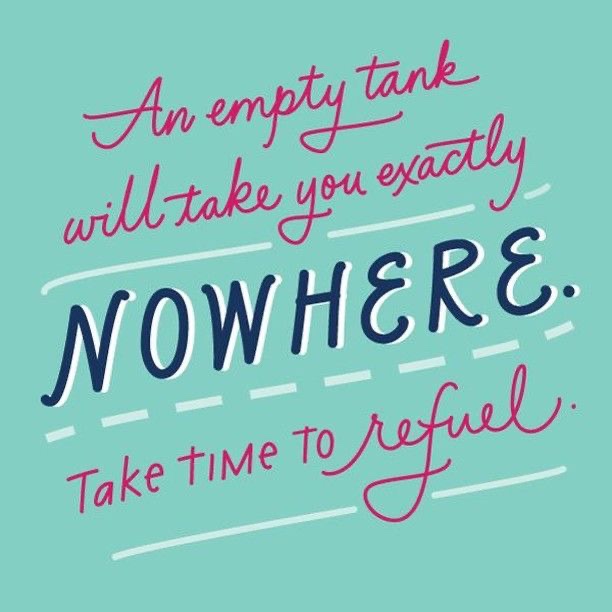
    Anyone with a caring heart can feel it’s selfish to put self before others. In fact, it’s the opposite. If our tank is empty, how can we help anyone else. So let’s keep our tanks full. Find time, No MAKE Time for self. Self-care is not Selfish; it is Self-Preservation!

  • Spread LOVE❤️

    Spread LOVE❤️

    #MySisterIsMeToo #MSiM2 #HealingOutLoud #YANA #HowUDoin #SelfAppreciation
    #RebootingGratitude …#RebootingLegacy …#RebootingPride…#UPDATECOMPLETE 🔋

    Stay Connected

    https://msim2journaltherapy.my.canva.site/